In the Beginning, God — Genesis 1:1–10; John 1:1-3
We often speak of “the stories of the Bible.” The Bible certainly contains many stories—Abraham, Moses, David, Ruth, Esther, Peter, Paul. But the Bible is not merely a collection of unrelated stories, each one offering a moral lesson. It is not Aesop’s Fables with religious characters.
If that were the nature of Scripture, the Bible would ultimately be about us: what we should do, how we should behave, and what principles we should follow. But the Bible is first about God—who he is, what he has done, and what he will do.
The Bible contains commands, but before it gives us instruction, it gives us an announcement. The first question is not, “What must I do?” but “What has God done?”
Unless we see that larger story, we may know many individual Bible stories while missing the Story of the Bible. We will see all the trees but never recognize the forest. And when that happens, we inevitably turn the Bible into moralism.
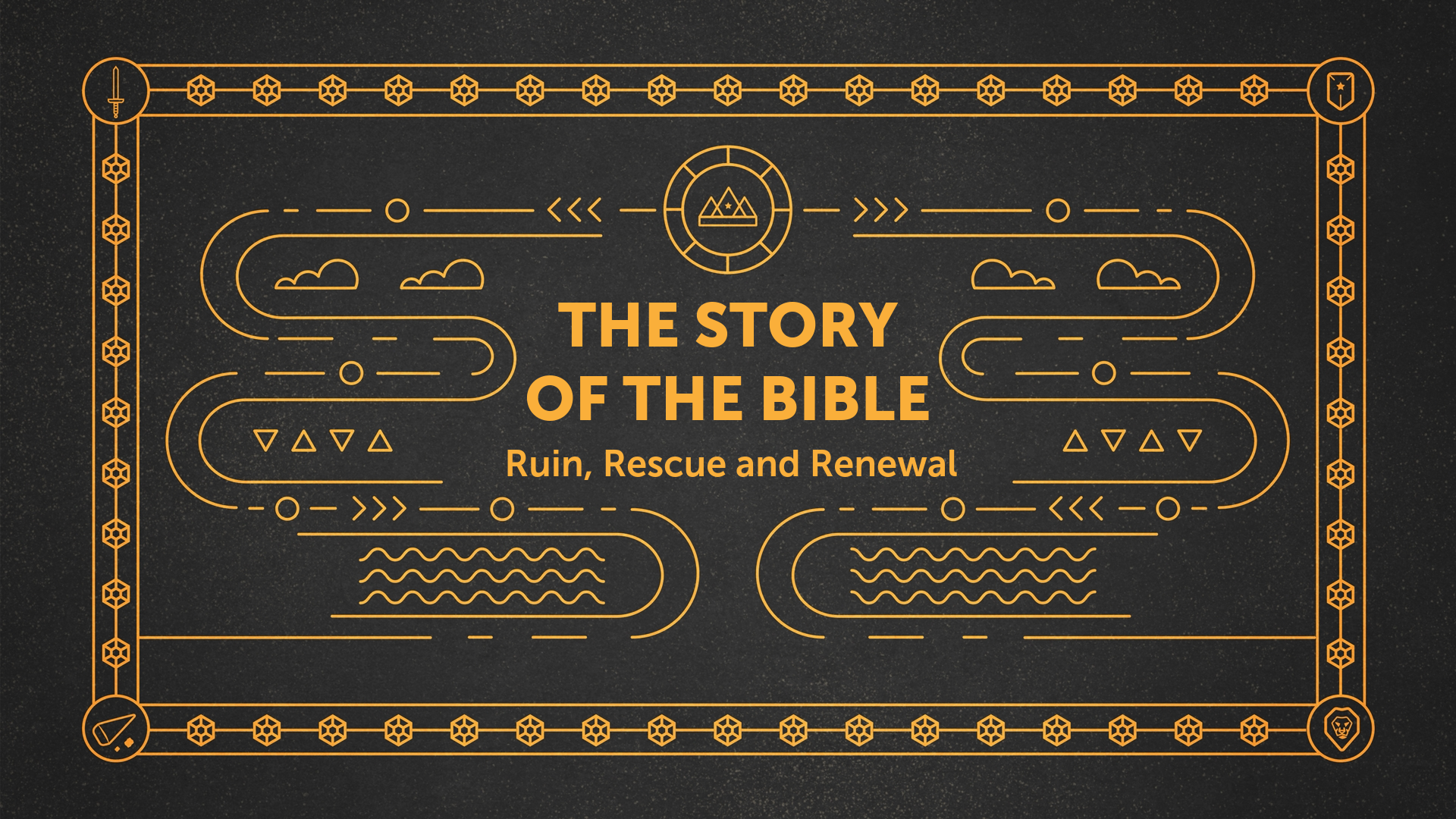
The Bible’s story may be described in three great movements: Ruin: God’s good creation is corrupted by human sin. Rescue: God acts in Christ to save his fallen creation. Renewal: God will make all things new.
But the story does not begin with ruin. Before anything was ruined, there was something beautiful, good, and whole. Let’s read about it in Genesis 1:1-10
I want to play about 55 seconds of a song before I start speaking. (“What a Wonderful World” by Louis Armstrong.) This song gives us an appropriate doorway into Genesis 1. You’ll hear it used in movie soundtracks, TV series, or even documentaries. Released during a period of tremendous national unrest toward the end of the 60s, the song insisted that the ugliness of the moment was not the whole truth about the world.
Genesis 1 also reads almost like a song. It has recurring lines, a deliberate rhythm, and repeated declarations that what God made was good. Before we can appreciate what sin has done to the world, we must first understand the wonder of the world as it came from God’s hand. So what does Genesis 1:1–3 tell us about this wonderful world?
I. The world begins with God “In the beginning God created the heavens and the earth.”
The Bible does not begin by explaining God. It begins by announcing him.
Before the heavens and the earth, God was already there. God does not emerge from the world; the world emerges because of God. He is not part of the created order. He is its source.
“In the beginning God created” is the bottom block in the Bible’s Jenga tower. Remove that block, and everything else collapses:
* There is no objective meaning to life. * Human beings have no given identity. * Morality becomes something we invent.
* History has no ultimate destination. * There is no reason to believe that ruin can ever be repaired.
But if God created us, our lives are not self-originated, self-defined, or self-owned. Psalm 100:3 says: “It is he who made us, and we are his.” The KJV expresses the accompanying idea: “and not we ourselves.” We did not make ourselves. We belong to the One who did.
That challenges one of the deepest assumptions of our culture: that the self is something we independently create. Scripture says our identity is first something we receive. Our Creator has already given us a nature, a purpose, and a place within his world.
Acts 17:24-26 says that God determined both the times and the boundaries in which people would live. We did not choose:
* The century into which we were born. * The family from which we came. * The body with which we began.
* The circumstances into which we arrived.
Those things do not determine everything about us, but they remind us that we are creatures, not creators. Our task is not to invent life from nothing but to live faithfully with the life God has given us.
In“The Fellowship of the Ring,” Frodo wishes he had not been born into such troubled times when he says, “I wish it need not have happened.” Gandalf reminds him: “So do I and so do all you live to see such times. But that is not for them tyo decide. All have to decide is what to do with the time that is given us.”
You may not have chosen the time or circumstances in which you are living, but none of them places you outside the providence of your Creator. The question is not, “Why wasn’t I given someone else’s life?” It is, “How can I faithfully live the life God has entrusted to me?”
But Genesis does more than tell us that God created. Read alongside John 1, it begins to show us what kind of God this Creator is.
II. The world is made by the triune God — John 1:1-3
Genesis 1 introduces God, the Spirit of God hovering over the waters, and the creative word God speaks. Genesis does not yet disclose the complete Christian doctrine of the Trinity, but when we read it in light of John 1, we see more clearly what was present at creation.
“In the beginning was the Word, and the Word was with God, and the Word was God.… All things were created through him.”
The God who creates is not a lonely, solitary being who creates because he lacks companionship. Before there was a world, there was already fellowship. Before there were human relationships, there was already love.
The Father loved the Son “before the foundation of the world” (John 17:24). Father, Son, and Holy Spirit eternally shared love, glory, and delight.
Creation was not God’s attempt to fill a deficiency in himself. God did not create because he needed something from us. Creation was the free expression of his abundant goodness.
Genesis 1:2 describes the Spirit hovering over the waters. The word is later used in Deuteronomy 32:11 of a bird hovering over its nest. It suggests an active, attentive, life-giving presence. Before anything takes form, the Spirit of God is already present and at work.
This tells us something profound about reality: relationship did not begin with us. Loving fellowship existed before creation because it exists eternally within God himself.
Therefore, relationships are not incidental to human life, just small value add-ons. We were made by a relational God and created in his image.
That explains why selfishness is at loggerheads with ultimate reality. Self-centeredness is not merely an unpleasant personality trait; it runs against the grain of God’s creation. The Father glorifies the Son, the Son glorifies the Father, and the Spirit directs attention to the Son. There is an eternal other-orientation within the life of God.
Service, generosity, forgiveness, covenant faithfulness, and Christian fellowship are not religious accessories. They are part of what it means to be restored to the kind of life for which our triune God created us.
Sin turns us inward. Grace turns us outward again.
This triune God does not remain distant from what he creates. His Spirit hovers, his Word goes forth, and darkness gives way to light.
III. The world is formed and filled by God’s Word
Genesis presents the earth as initially “formless and empty,” with darkness over the deep. This is not yet moral evil. It is creation awaiting the form, fullness, and fruitfulness God will give it.
Then God speaks: “Let there be light.” And there was light.
God’s Word is effective. He does not struggle with the darkness or negotiate with it. He speaks, and light appears. Throughout Genesis 1, God forms what is unformed and fills what is empty. He brings distinction, order, beauty, fruitfulness, and life.
The result is not merely functional. It is good. By the conclusion, it is “very good.”
But as the Bible’s story continues, sin begins to reverse that order. God makes the world; through disobedience, humanity begins to unmake it. Sin brings disorder into what God ordered, division into relationship, death into life, and darkness into light.
Jeremiah 4:23 deliberately echoes Genesis: “I looked at the earth, and it was formless and empty. I looked to the heavens, and their light was gone.” Jeremiah describes judgment as a kind of de-creation—the unraveling of God’s wonderful world. The Exodus plagues portray a similar movement, culminating in darkness and death.
Yet even in Jeremiah’s terrible vision, God says: “Yet I will not make a full end.” The ruin will not have the final word.
Centuries later, darkness fell again. At the crucifixion of Jesus, darkness covered the land. The earth shook, the rocks split, and the temple curtain was torn. Creation itself seemed to convulse as Christ bore the judgment of human sin.
The Maker entered our unmaking, the chaos we have collectively created. The Creator submitted himself to the darkness and death unleashed by our sin so that we could be remade in his image.
The One through whom light first shone entered our darkness. The One through whom life came into being entered death. But darkness could not overcome the Light, and death could not hold the Author of life.
Conclusion: The Bible begins with a wonderful world, but it does not take long for that world to be ruined. What God formed, we deformed. What God filled with life, we subjected to death. What God ordered toward loving fellowship, we turned inward through selfishness.
But the Creator did not abandon his creation. As the hymn says, “When Christ, the mighty Maker, died,” he died for the sin of his creatures. The Maker entered our ruin so that ruined people could become a new creation.
That gives us three foundations for living:
*Our identity rests in our Creator: We do not have to invent ourselves.
*Our relationships reflect the triune God: We were not made to live turned inward.
*Our hope rests in God’s creative power: The God who spoke light into darkness can bring life out of death and renewal out of ruin.
The Story of the Bible begins, “In the beginning, God.” And when the story reaches its conclusion, God will say: “Look, I am making everything new.” The Story begins with God’s good creation, and it ends with God’s renewed creation. Everything between those two moments is the story of how the mighty Maker rescues and remakes what we have ruined.