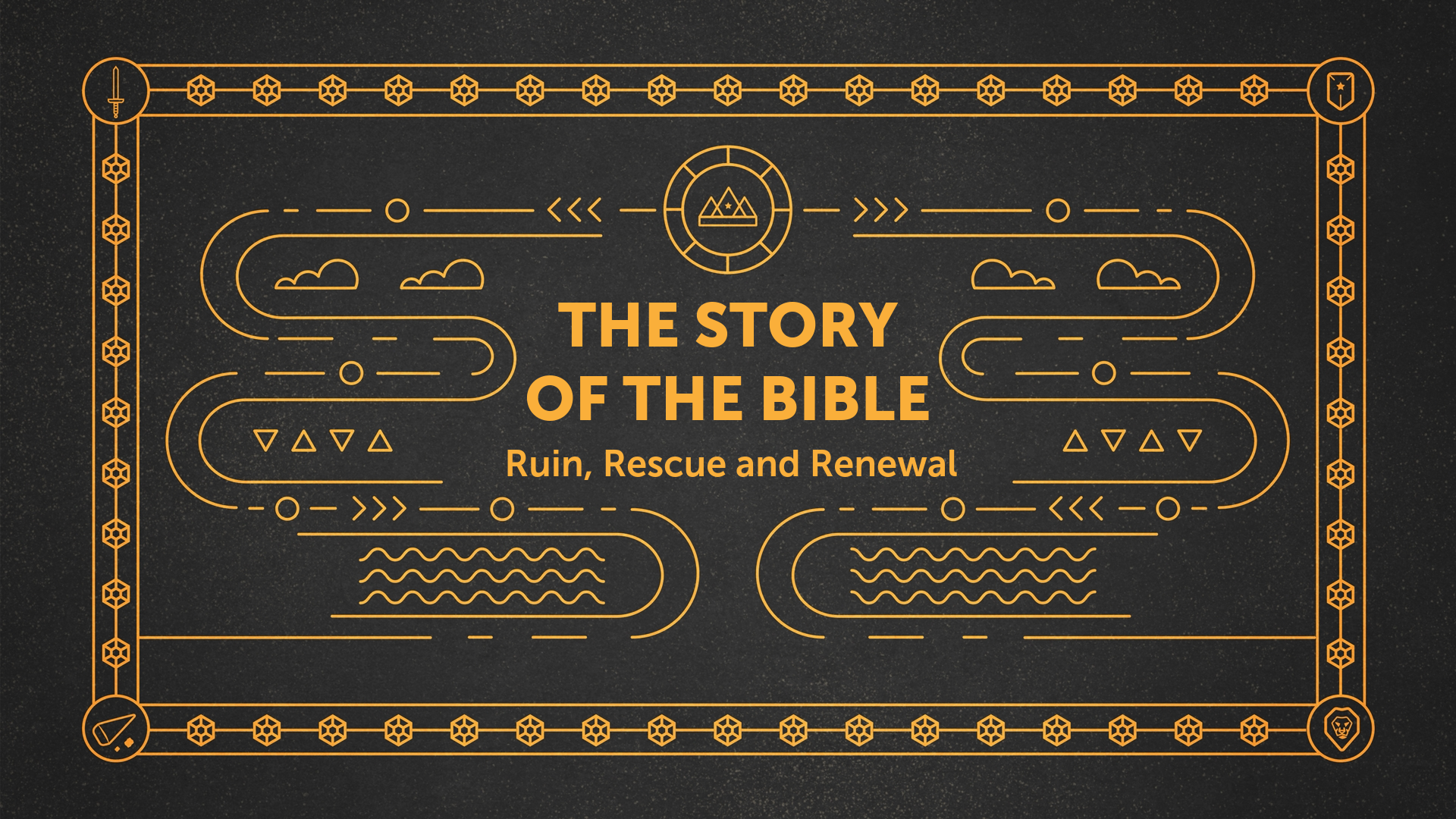
The Story of the Bible — Genesis 4:1-10

Two Brothers

What is wrong with the world? We hear answers to that question every day. Some point to bad leadership. Others point to a lack of education, broken families, or unfair systems. Those problems deserve attention. But the Bible takes us beneath the conditions around us to something within us: the human heart turned away from God.

We have been following the Story of the Bible through creation, ruin, rescue, and renewal. God made human beings to reflect his character and represent him in his world. In Genesis 3, we watched them distrust his goodness and disobey his word. Now Genesis 4 shows us what happens as that rebellion moves into the next generation.

The trouble spreads quickly. In the garden, a husband and wife hide from God. In the next chapter, one brother kills another. Sin damages our relationship with God and then works its way into our relationships with people.

Continue reading “The Story of the Bible — Genesis 4:1-10”

The Story of the Bible — Genesis 3:1-7

Where It All Began

The title this morning is “Where It All Began.” What we mean by “it” depends on where we open the book of Genesis. In chapter 1, we are talking about the beginning of creation. But when we turn to chapter 3, we come to the beginning of something that does not belong in that good world. We come to human rebellion and the ruin that follows it.

We have been tracing the Story of the Bible: creation, ruin, rescue, and renewal. We have seen that God made us to reflect his character, represent him in his world, and work under his direction. Now we have to ask why creatures made for that life turned away from it. How did people surrounded by the goodness of God become suspicious of the God who gave it?

Football season is upon us. Football coaches spend a lot of time watching game film. A play that looked like one person’s mistake may reveal a problem that started somewhere else. The coach slows it down. Where did the assignment break down? What did the player see? What did he fail to see? Understanding how the play went wrong matters when you step onto the field again.

Continue reading “The Story of the Bible — Genesis 3:1-7”

The Story of the Bible — Genesis 2:1-20

Working Together with God

Labor Day weekend is an appropriate time to talk about work. We have a complicated relationship with it. We complain about having too much work, but we worry when we do not have enough. We look forward to retirement, but we also fear feeling unnecessary. Work can give us satisfaction, but it can also drain us.

Work is not limited to a paid occupation. Raising children is work. Caring for an aging parent is work. Maintaining a home is work. Serving a church or community is work. And retirement may end a career, but it does not end our calling to contribute to the good of others.

The Bible’s story helps us understand both what is good about work and why work can be so difficult. In the story of the Bible, God created work as something good, but human sin brought frustration and futility into work. Christ rescues us from using work to establish our worth, and God renews our work as service offered to him and to others.

Three movements will guide us today: what work was, what work is now, and what work points to.

I. What Work Was

The Bible introduces work before it introduces sin. Work is not part of the curse; work is part of God’s good creation.

A. God is the first worker. Genesis 2 begins: “Thus the heavens and the earth were finished, and all the host of them.” The creation account presents God as purposeful and active. He creates, separates and orders, fills what was empty, brings forth life, and evaluates what he has made.

Genesis 2:2 speaks of “his work that he had done.” God didn’t create because He lacked something/needed to prove himself. He worked out of his abundant wisdom, goodness, love. So work, in its org form, reflects something abt God.

B. Human work reflects the work of the Creator. Notice the parallel between God and the man in Genesis 2. Verse 7 says God “formed the man of dust from the ground.” Verse 8 says God “planted a garden in Eden.” Verse 15 says God placed the man in the garden “to work it and keep it.” God forms and plants; the man is then commissioned to cultivate and preserve.

Last week we saw that human beings were made in God’s image to reflect His character and represent God’s rule. Work is one way we fulfill that calling. When we create, cultivate, organize, repair, protect, teach, and serve, our work can reflect the Creator’s own activity.

C. Work brings order and fruitfulness from God’s creation. God did not place Adam in a finished world in which nothing remained to be done. The garden was good, but it was also capable of further cultivation. Adam did not create the soil, plants, water, or potential for growth. God supplied those things. Adam’s responsibility was to work with what God had provided.

This remains true of our work. A farmer does not create seed, soil, sunlight, or rain; the farmer cultivates them. A teacher does not create a student’s mind; the teacher helps develop it. A builder does not create the raw materials; the builder orders them into something useful. A musician does not create sound; the musician arranges it into beauty. Human work receives what God has made and develops its possibilities for his glory and our neighbor’s good.

D. Work was never meant to be an isolated pursuit. Within this otherwise good creation, God says: “It is not good that the man should be alone” (Genesis 2:18). Human beings were not created to be self-sufficient. We need the abilities, perspectives, encouragement, and assistance of others. Work becomes distorted when we treat coworkers, employees, customers, or family members merely as tools for our advancement.

Application: Whatever legitimate work God has placed before you matters. You may not see dramatic results, but faithfulness has value because God sees it. You are not merely earning income or completing tasks. You are caring for a portion of God’s world and serving people made in his image.

Summary: Work was created as a good gift through which human beings reflect the Creator, cultivate his world, and contribute to the good of others. Transition: If work was created good, why does it so often leave us frustrated, exhausted, or unfulfilled? To answer that question, we must move from Genesis 2 into Genesis 3.

II. What Work Is Now

The original goodness of work has not disappeared, but something has happened to both our work and us.

A. Work remains good, but it has become toilsome. After the Fall: “Cursed is the ground because of you; in pain you shall eat of it all the days of your life; thorns and thistles it shall bring forth for you.” (Genesis 3:17–18)

Notice that God does not introduce work after the Fall. Adam was already working the garden. Sin introduces painful toil, resistance, frustration, and futility. The ground still produces fruit, but also thorns. That describes our experience of work: some efforts succeed, other efforts fail. Some plans bear fruit, others unravel. Equipment breaks. Organizations drift. People misunderstand. Bodies become tired. Achievements do not last forever. We still see vestiges of work’s original goodness, but we never experience that goodness without the effects of the Fall.

B. Work is performed under the shadow of mortality. God had warned Adam that disobedience would bring death. Adam and Eve did not fall to the ground physically dead on the day they sinned. Yet death immediately entered their experience. They were separated from God. Alienation entered their relationship. They were expelled from the garden. Their bodies began moving toward physical death.

Our mortality shapes all our work. No matter how hard we work, we cannot preserve everything indefinitely. Buildings deteriorate. Institutions decline. Technology becomes obsolete. People who once carried great responsibility lose strength.

When we are young, we may have energy but lack wisdom. When we have accumulated wisdom, we may discover that our energy is no longer what it once was. We are working in a world where things continually fall back into disorder.

C. The doctrines of creation and the Fall protect us from two errors. The doctrine of creation protects us from cynicism. Work is not inherently meaningless. The world remains God’s world. God still brings fruit from human effort. Our labor can still serve genuine good.

The doctrine of the Fall protects us from idealism. No job will be perfect. No career will completely fulfill us. No organization will function without conflict and disappointment. No human achievement can reverse death or restore paradise. If we forget creation, we will despise work. If we forget the Fall, we will expect work to save us. Biblical wisdom allows us to appreciate work without worshiping it and to endure its frustrations without surrendering to despair.

D. Sin has also created “the work beneath our work”. The Fall did not merely change the ground. It changed the worker. In the garden, Adam and Eve lived in God’s presence. They received their identity from him. Their value was secure because they bore his image. Their work flowed from God’s blessing.

After sin, they hid from God and began trying to cover themselves. We have been trying to cover ourselves ever since.  Work becomes one of the primary ways we attempt to prove that we matter. Beneath the visible work, another kind of work may be taking place: trying to prove that we are successful, trying to earn another person’s approval, trying to establish that we are indispensable, trying to outrun feelings of failure, or trying to build an identity no one can take away. The problem is not necessarily the amount of work we are doing. The deeper problem may be what we are asking our work to do for us.

Examine yourself: If your work goes unnoticed, do you feel as though you no longer matter? If someone else succeeds, does it threaten your sense of worth? When you cannot work, do you struggle to know who you are? Are you serving through your work, or are you using work to prove yourself?

Summary: Work remains a good gift, but sin has made it frustrating and has tempted us to turn work into a source of identity and worth. Transition: We need more than a better job, improved working conditions, or a longer vacation. We need a kind of rest that reaches beneath our weariness and frees us from the need to prove ourselves.

III. What Work Points To

Genesis connects work with rest. To understand work properly, we must understand the rest God provides.

A. God’s rest is the rest of completed work. Genesis 2:2 says: “And on the seventh day God finished his work that he had done, and he rested.” God did not rest because creation exhausted him. God rested because his work was complete. Nothing needed to be added to make creation “very good.” God’s rest is the satisfaction and enjoyment of completed work.

We ordinarily think we must work first to earn the right to rest. We accumulate vacation time through our service. We finish the project before taking a break. We rest only after everything has been completed. But the biblical pattern contains a surprising truth. Adam was created on the sixth day. His first complete day was God’s day of rest. Humanity began not by earning rest but by receiving it. Biblically speaking, we need the gift of rest in order to work properly.

B. God’s rest does not mean that we stop working. Hebrews 4:10 says: “Whoever has entered God’s rest has also rested from his works as God did from his.” Does that mean Christians no longer need jobs or responsibilities? Of course not.  Scripture repeatedly calls believers to diligent, faithful work.

To rest from our works means that we stop treating our works as the basis of our acceptance before God. Gospel rest is the cessation of the need to prove ourselves. It is the settled confidence that our ultimate worth and standing do not rest upon our performance. When we possess that rest, we can actually work better.  We can admit mistakes because failure does not destroy our identity. We can celebrate another person’s success because it does not diminish us. We can perform unnoticed tasks because God sees them. We can stop when it is time to stop because the world does not depend upon us. We can retire from a position without retiring from a meaningful life.

C. We enter God’s rest through Christ’s finished work. When God completed the work of creation, he rested because it was finished. At the cross, Jesus declared: “It is finished” (John 19:30). Hebrews 10:12 says that after Christ offered one sacrifice for sins, he “sat down at the right hand of God.”

What was finished? Jesus lived the faithful life we should have lived but did not. He fulfilled the obedience we owed to God. He died the death our sin deserved. He accomplished everything necessary to reconcile us to God.

We do not add to Christ’s finished work. We receive what he has accomplished by trusting him. That is the deepest rest our souls need. We no longer have to work our way into God’s presence, earn his love, or construct an identity that can survive death. In Christ, God receives us by grace.

E. Christ’s rest frees us to work with God. Gospel rest does not make us passive. It changes why and how we work. We do not work to become somebody. In Christ, we have been received by God; therefore, we are free to serve somebody. Our work no longer has to be primarily about us. We can work with God, joining in the good purposes he is accomplishing…

For God, offering our labor as an act of worship…Alongside others, recognizing that we were not created to work alone…For the good of others, rather than only for personal advancement.

This does not mean we contribute to Christ’s work of redemption. That work is finished. It means we participate in “the good works” God prepared for us to do as people saved by grace (Ephesians 2:10).

Application: The Christian may work hard, but does not have to be driven. The Christian may pursue excellence, but does not have to construct an identity from achievement. The Christian may experience failure, but failure does not have the final word. The Christian may grow weary, but our labor in the Lord is not in vain.

Summary: The finished work of Christ gives us the rest we could never earn, freeing us to work faithfully with God, for God, and for the good of others.

Conclusion: We can apply the story of the Bible to work. Creation: God made work good. Ruin: Sin made work toilsome and turned it into a way of proving ourselves. Rescue: Jesus completed the work necessary to reconcile us to God. Renewal: Secure in Christ, we can once again work as God intended—for his glory and our neighbor’s good.

What are you asking your work to prove about you? Have you become idealistic about work or cynical toward it? What would change if you approached this week’s work from the rest Christ has already provided?

We do not work in order to earn our worth. We work becuz, thr the finished work of JX, we’ve already been received by God. Resting n him, we are free to cultivate his world, serve our neighbors, and join faithfully n th work he has given us.

The Story of the Bible — Genesis 1:20-31; 2:5-7

Made in God’s Image — Genesis 1:20–31; 2:5–7

Introduction: Last week we began a series designed to give us a thirty-thousand-foot view of the Bible. The Bible contains many individual stories, but those stories belong to one great story:

  * A good creation ruined by human sin.

  * A ruined creation rescued through Jesus Christ.

  * A rescued creation that will ultimately be renewed by God.

We have summarized that movement with three words: **ruin, rescue, and renewal**. This is not simply one religious story among many. It is the true story of the universe—the story in which our individual stories find their meaning.

Last week we began where both the Bible and reality begin: “In the beginning, God.” Today we come to the climax of the creation account: the creation of human beings. Human beings belong to creation. We are creatures, not the Creator. Yet human beings occupy a unique place within creation. Of everything God made, human beings alone are described as being made in God’s image.

“Made in God’s Image” is one of those enormous biblical themes that begins in Genesis and runs throughout the entire story of Scripture. God created every human being to reflect his character and represent his rule. Although sin has distorted that image, God renews it in us through Jesus Christ so that we increasingly resemble him and reflect his glory.

Three questions will guide us: 1. What does Genesis 1 tell us about being made in God’s image? 2. What does being made in God’s image mean? 3. Is the image of God still present in us?

I. What Does Genesis 1 Tell Us About Being Made in God’s Image?

The language of the creation account changes when Genesis reaches the creation of human beings.

A. Human beings are not merely created “according to their kind”. Genesis repeatedly describes the animals as being created “according to their kinds.” (sea creatures, birds, livestock, creeping things, and wild animals). But verse 26 does not say, “Let us make humanity according to their kind.” God says: “Let us make man in our image, after our likeness.”

The animals are created according to their respective kinds. Human beings are created according to God’s image. This does not mean that humanity is divine. We remain creatures. But it gives humanity a unique status and calling within creation.

B. God does not merely speak humanity into existence; he speaks to humanity. In verses 20 and 24, the repeated expression is, “And God said.” But after God creates the man and the woman, verse 28 says: “And God said to them.”

God addresses human beings personally. He blesses them. He gives them a commission. He brings them into a conscious relationship with himself. He makes them responsible for how they live within his world. From the beginning, human beings were created not only to exist but to hear God, respond to God, and live under God’s word.

C. The creation of humanity is presented as a direct and deliberate act of God. God says: “Let the waters swarm.” and “Let the earth bring forth living creatures.” But when God creates humanity, he says: “Let us make man.” The narrative slows down and becomes more deliberate. 

The plural language is not the whole truth, thus a complete proof of the Trinity by itself. Nevertheless, when read in light of the whole Bible, it fits beautifully with the revelation of the triune God introduced in last week’s sermon. At a minimum, “Let us make” emphasizes the solemnity and significance of what God is about to do.

D. Genesis 2 gives us a close-up of humanity’s creation. Chapter 1 gives us the broad view; 2 moves closer. God forms the man from the dust of the ground and breathes into him the breath of life.This picture simultaneously humbles and exalts us. We come from the dust. We share the earth with the other creatures. We are physical, dependent, and mortal. Yet our life comes directly from God. God places us in his presence and entrusts us with a particular vocation.

We do not have to deny the similarities between human beings and animals to affirm human uniqueness. Genesis acknowledges both:* We belong to creation.* We are uniquely identified as God’s image-bearers.

We have to remember that both male and female bear God’s image. Genesis 1:27 repeats the truth three times: “So God created man in his own image, in the image of God he created him; male and female he created them.”

The man and the woman both bear God’s image. Neither bears it more completely than the other.

So human dignity is therefore not based on: * Gender * Age * Intelligence * Physical ability * Social position 

* Productivity   * Independence  * Achievement—Human dignity rests upon God’s creative act.

Summary of Point 1: Human beings are part of God’s creation, but we possess a unique status within it. We were deliberately created, personally addressed, divinely blessed, and commissioned as God’s image-bearers. Okay we’re made in God’s image. But what exactly does that mean?

II. What Does It Mean to Be Made in God’s Image?

The words *image* and *likeness* do not describe two separate parts of human nature. Together they communicate that humanity was created to resemble God and represent God.

We sometimes say that a child is “the spitting image” of a parent. We mean that something about the parent can be seen in the child: * Facial features * Expressions * Gestures * Mannerisms * Personality.

In a far greater way, human beings were created so that something true about God could be seen in us. An image is not the original. A reflection is not the reality it reflects. We are not divine. Yet God created human beings to reflect his character and represent his rule within creation.

Four implications follow, four answers to the “so what?” question:

A. Being made in God’s image defines us and sets us apart

Our deepest identity is something we receive from God, not something we achieve for ourselves. Before Adam and Eve accomplished anything, God had already placed his image upon them.

We should be careful about identifying the image exclusively with one particular human ability.

  * If it is merely intelligence, what about an infant or a person with intellectual disabilities?

  * If it is independence, what about someone who depends upon others for daily care?

  * If it is productivity, what about an elderly person who can no longer work?

The image of God is not an achievement some people possess more fully than others. Every human being is an image-bearer. Your value does not rise when you succeed or fall when you fail. Your value is not determined by whether other people approve of you. You do not have to earn the right to be treated as a human being. God has already declared something about you by creating you in his image.

B. Being made in God’s image both exalts and humbles us

The expression itself holds these truths together. We are an image. That humbles us. We are not self-created or self-sufficient. We do not generate our own purpose. Like a mirror, we exist to reflect a glory that belongs to someone else.

We are the image of God. That exalts us. The Creator has crowned human beings with glory and honor. God has entrusted his world to human care.

The biblical answer to pride is not that human life is worthless. The biblical answer to despair is not that we are our own gods. We are small before God, but we are precious to God. We do not need to inflate ourselves because dignity is God’s gift. We do not need to despise ourselves because God has placed his image upon us.

C. Being made in God’s image gives every human being dignity

The image of God remains significant after the Fall. Genesis 5:1–2 repeats that God made humanity in his likeness. Genesis 9:6 forbids murder because God made humanity in his own image.

James 3:9 extends the principle from actions to words: With our tongues, we bless God. With the same tongues, we curse people made in God’s likeness. James says this contradiction “ought not to be so.” The image of God grounds not only the protection of human life but also the dignity with which human beings should be treated.

So… We cannot praise God while speaking as though other people are worthless. This truth should temper the discourse we sometimes hear—even among believers—about: * Political opponents * People of another generation * People of another race * Immigrants * The poor * The unborn * The elderly * People with disabilities * People whose beliefs or behavior we oppose.

Recognizing God’s image does not require us to approve of everything another person believes or does. It requires us to refuse contempt. We can speak truth without denying another person’s God-given dignity.

So here’s a question for you: whom are you tempted to reduce to a label, an irritation, an opponent, a failure, or a problem?

D. Being made in God’s image commissions us

The image of God is not merely a status we enjoy. It is a vocation we fulfill. In verse 22, God commands the animals to be fruitful and multiply. In verse 28, God gives humanity that same command but adds: Fill the earth/Subdue it/Exercise dominion.

Humanity is commissioned to exercise responsible rule under God’s rule. Dominion does not mean: Exploiting creation, 

Abusing power, Dominating other people, Treating the world as though it belongs to us. Dominion means cultivating God’s world in a manner consistent with God’s character.

Corporate appl: A church does not exist merely to preserve itself or maintain its activities. A congregation exists to show its community what God is like. We reflect him by proclaiming his truth, practicing his love, and pursuing his mission.

So we’ve said that to be made in God’s image means that human beings possess God-given identity and dignity and have been commissioned to reflect God’s character and represent his rule. But that raises a difficult question. When we look honestly at humanity—and at ourselves—the resemblance to God is often very difficult to see. Is God’s image still present in us?

III. Is the Image of God Still Present in Us?

The short answer is yes—and no. Yes, the image of God remains present. Genesis 9 appeals to God’s image after the Fall.

James describes people as made in God’s likeness long after sin entered the world. The Fall did not turn human beings into nonpersons. Sin did not erase: human dignity, responsibility, accountability, or humanity’s relationship to its Creator. Every person still bears God’s image, including those who do not acknowledge God.

However, we no longer reflect God as clearly as he intended. Tim Keller helpfully described image-bearing with two words: reflection and representation. Like a mirror, we were created to receive God’s glory and reflect his character into the world. A damaged mirror is still a mirror, but it does not give a clear reflection. In the same way, the image remains, but the reflection has been distorted. Sin has bent our desires, corrupted our relationships, misdirected our worship, turned our capacities toward self-exaltation, and caused us to misuse the authority God entrusted to us.

Genesis is about to present a bleak picture of humanity: Adam and Eve hide from God, they blame one another, violence enters the human family, and humanity’s corruption spreads across the earth.

Sin is more than breaking God’s law. It is the vandalizing of God’s image. We were made to reflect God’s glory, but we turn the mirror toward ourselves. We were made to represent God’s rule, but we seek to establish our own. We were made to cultivate creation, but we consume it for ourselves. We were made to serve one another, but we use one another.

If the story ended there, we would retain our dignity as image-bearers but remain unable to fulfill the purpose for which God made us. However, God renews his image in us through Jesus Christ

The New Testament speaks about the renewal of God’s image:

  * Ephesians 4:23–24: the new self is created after God’s likeness in righteousness and holiness.

  * Colossians 3:10: the new self is being renewed after the image of its Creator.

  * Romans 8:29: God is conforming believers to the image of his Son.

How does God renew the image in us? The answer is Jesus. Colossians 1:15 calls Jesus: “The image of the invisible God.” Jesus is the perfect, undistorted image. If we want to know what God is like, we look at Jesus: His holiness, compassion, authority, humility, truthfulness, obedience, self-giving love, and unending life.

Jesus did not come merely to provide ruined image-bearers with a better example. He came to rescue us. He lived the faithful human life we failed to live. He bore the guilt of our rebellion at the cross. He rose as the beginning of a renewed humanity. He gives his Spirit to everyone who trusts him.

Bottom line is that we are transformed as we behold Christ. Second Corinthians 3:18 describes believers as beholding the Lord’s glory and being transformed into the same image from one degree of glory to another.

The context includes the veil Paul mentions in verse 14. Without Christ, people may read Scripture without seeing its true destination. When a person turns to the Lord, the veil is removed. We begin to see the biblical story as the story that leads to Jesus.

The Spirit does not merely give us information about Christ. The Spirit transforms us as we behold Christ. We become like what we worship.

However, lesser loves also shape what we reflect. Whatever receives our deepest attention and affection begins to shape what other people see in us. 

If I live for human approval, I continually wonder whether people notice, praise, include, or agree with me. My anxiety and defensiveness reveal the importance I have assigned to approval. I reflect to others that approval is what really matters.

The same can happen with: * Success * Comfort * Security * Control * Self-preservation

But when we behold Jesus and his greatness becomes real to us, those rival glories begin to lose their control. Approval does not have to rule us because God has received us in Christ. Comfort does not have to rule us because Jesus is worth following through sacrifice. Fear does not have to rule us because the risen Christ holds our future. Control does not have to rule us because Jesus is Lord.

As we behold Christ, other people begin to see something of Christ reflected in us. In this sense, exercising dominion includes refusing to be dominated by created things. We receive them as gifts. We use them as stewards. We refuse to worship them as gods.

Conclusion:

Late in the account of his life, Jesus is handed a coin and asked about paying taxes to Caesar. Jesus asks: “Whose likeness and inscription is this?” The coin bears Caesar’s image, so it belongs within Caesar’s realm. But human beings bear God’s image. Therefore, the entirety of our lives belongs to God.

So here’s the story of the Bible: Creation (we were made in God’s image); Ruin (sin distorted that image); Rescue (the perfect image of God came to save us); Renewal (the Spirit is conforming us to Christ’s image)

We answered these questions this morning—What? So What? Now What?

1. What are you beholding so steadily that it is shaping what you reflect?

2. Whom are you tempted to treat as something less than an image-bearer?

3. Where has God placed you to reflect his character and represent his rule?

4. Are you trying to repair yourself, or are you turning to Christ for rescue and renewal?

We were made to reflect God. We are rescued by the Son who perfectly reveals God. We are renewed as the Spirit conforms us to the image of that Son.
The Story of the Bible–Gen. 1; John 1

In the Beginning, God — Genesis 1:1–10; John 1:1-3

We often speak of “the stories of the Bible.” The Bible certainly contains many stories—Abraham, Moses, David, Ruth, Esther, Peter, Paul. But the Bible is not merely a collection of unrelated stories, each one offering a moral lesson. It is not Aesop’s Fables with religious characters.

If that were the nature of Scripture, the Bible would ultimately be about us: what we should do, how we should behave, and what principles we should follow. But the Bible is first about God—who he is, what he has done, and what he will do.

The Bible contains commands, but before it gives us instruction, it gives us an announcement. The first question is not, “What must I do?” but “What has God done?”

Unless we see that larger story, we may know many individual Bible stories while missing the Story of the Bible. We will see all the trees but never recognize the forest. And when that happens, we inevitably turn the Bible into moralism.

The Bible’s story may be described in three great movements: Ruin: God’s good creation is corrupted by human sin. Rescue: God acts in Christ to save his fallen creation. Renewal: God will make all things new.

But the story does not begin with ruin. Before anything was ruined, there was something beautiful, good, and whole. Let’s read about it in Genesis 1:1-10

I want to play about 55 seconds of a song before I start speaking. (“What a Wonderful World” by Louis Armstrong.) This song gives us an appropriate doorway into Genesis 1. You’ll hear it used in movie soundtracks, TV series, or even documentaries. Released during a period of tremendous national unrest toward the end of the 60s, the song insisted that the ugliness of the moment was not the whole truth about the world.

Genesis 1 also reads almost like a song. It has recurring lines, a deliberate rhythm, and repeated declarations that what God made was good. Before we can appreciate what sin has done to the world, we must first understand the wonder of the world as it came from God’s hand.  So what does Genesis 1:1–3 tell us about this wonderful world?

I. The world begins with God   “In the beginning God created the heavens and the earth.”

The Bible does not begin by explaining God. It begins by announcing him.

Before the heavens and the earth, God was already there. God does not emerge from the world; the world emerges because of God. He is not part of the created order. He is its source.

“In the beginning God created” is the bottom block in the Bible’s Jenga tower. Remove that block, and everything else collapses:

* There is no objective meaning to life. * Human beings have no given identity. * Morality becomes something we invent.

* History has no ultimate destination. * There is no reason to believe that ruin can ever be repaired.

But if God created us, our lives are not self-originated, self-defined, or self-owned. Psalm 100:3 says: “It is he who made us, and we are his.” The KJV expresses the accompanying idea: “and not we ourselves.” We did not make ourselves. We belong to the One who did.

That challenges one of the deepest assumptions of our culture: that the self is something we independently create. Scripture says our identity is first something we receive. Our Creator has already given us a nature, a purpose, and a place within his world.

Acts 17:24-26 says that God determined both the times and the boundaries in which people would live. We did not choose:

* The century into which we were born. * The family from which we came. * The body with which we began.

* The circumstances into which we arrived.

Those things do not determine everything about us, but they remind us that we are creatures, not creators. Our task is not to invent life from nothing but to live faithfully with the life God has given us.

In“The Fellowship of the Ring,” Frodo wishes he had not been born into such troubled times when he says, “I wish it need not have happened.” Gandalf reminds him: “So do I and so do all you live to see such times. But that is not for them tyo decide. All have to decide is what to do with the time that is given us.”

You may not have chosen the time or circumstances in which you are living, but none of them places you outside the providence of your Creator. The question is not, “Why wasn’t I given someone else’s life?” It is, “How can I faithfully live the life God has entrusted to me?”

But Genesis does more than tell us that God created. Read alongside John 1, it begins to show us what kind of God this Creator is.

II. The world is made by the triune God  — John 1:1-3

Genesis 1 introduces God, the Spirit of God hovering over the waters, and the creative word God speaks. Genesis does not yet disclose the complete Christian doctrine of the Trinity, but when we read it in light of John 1, we see more clearly what was present at creation.

“In the beginning was the Word, and the Word was with God, and the Word was God.… All things were created through him.”

The God who creates is not a lonely, solitary being who creates because he lacks companionship. Before there was a world, there was already fellowship. Before there were human relationships, there was already love.

The Father loved the Son “before the foundation of the world” (John 17:24). Father, Son, and Holy Spirit eternally shared love, glory, and delight.

Creation was not God’s attempt to fill a deficiency in himself. God did not create because he needed something from us. Creation was the free expression of his abundant goodness.

Genesis 1:2 describes the Spirit hovering over the waters. The word is later used in Deuteronomy 32:11 of a bird hovering over its nest. It suggests an active, attentive, life-giving presence. Before anything takes form, the Spirit of God is already present and at work.

This tells us something profound about reality: relationship did not begin with us. Loving fellowship existed before creation because it exists eternally within God himself.

Therefore, relationships are not incidental to human life, just small value add-ons. We were made by a relational God and created in his image.

That explains why selfishness is at loggerheads with ultimate reality. Self-centeredness is not merely an unpleasant personality trait; it runs against the grain of God’s creation. The Father glorifies the Son, the Son glorifies the Father, and the Spirit directs attention to the Son. There is an eternal other-orientation within the life of God.

Service, generosity, forgiveness, covenant faithfulness, and Christian fellowship are not religious accessories. They are part of what it means to be restored to the kind of life for which our triune God created us.

Sin turns us inward. Grace turns us outward again.

This triune God does not remain distant from what he creates. His Spirit hovers, his Word goes forth, and darkness gives way to light.

III. The world is formed and filled by God’s Word

Genesis presents the earth as initially “formless and empty,” with darkness over the deep. This is not yet moral evil. It is creation awaiting the form, fullness, and fruitfulness God will give it.

Then God speaks: “Let there be light.” And there was light.

God’s Word is effective. He does not struggle with the darkness or negotiate with it. He speaks, and light appears. Throughout Genesis 1, God forms what is unformed and fills what is empty. He brings distinction, order, beauty, fruitfulness, and life.

The result is not merely functional. It is good. By the conclusion, it is “very good.”

But as the Bible’s story continues, sin begins to reverse that order. God makes the world; through disobedience, humanity begins to unmake it. Sin brings disorder into what God ordered, division into relationship, death into life, and darkness into light.

Jeremiah 4:23 deliberately echoes Genesis: “I looked at the earth, and it was formless and empty. I looked to the heavens, and their light was gone.” Jeremiah describes judgment as a kind of de-creation—the unraveling of God’s wonderful world. The Exodus plagues portray a similar movement, culminating in darkness and death.

Yet even in Jeremiah’s terrible vision, God says: “Yet I will not make a full end.” The ruin will not have the final word.

Centuries later, darkness fell again. At the crucifixion of Jesus, darkness covered the land. The earth shook, the rocks split, and the temple curtain was torn. Creation itself seemed to convulse as Christ bore the judgment of human sin.

The Maker entered our unmaking, the chaos we have collectively created. The Creator submitted himself to the darkness and death unleashed by our sin so that we could be remade in his image.

The One through whom light first shone entered our darkness. The One through whom life came into being entered death. But darkness could not overcome the Light, and death could not hold the Author of life.

Conclusion: The Bible begins with a wonderful world, but it does not take long for that world to be ruined. What God formed, we deformed. What God filled with life, we subjected to death. What God ordered toward loving fellowship, we turned inward through selfishness.

But the Creator did not abandon his creation. As the hymn says, “When Christ, the mighty Maker, died,” he died for the sin of his creatures. The Maker entered our ruin so that ruined people could become a new creation.

That gives us three foundations for living:

*Our identity rests in our Creator: We do not have to invent ourselves.

*Our relationships reflect the triune God: We were not made to live turned inward.

*Our hope rests in God’s creative power: The God who spoke light into darkness can bring life out of death and renewal out of ruin.

The Story of the Bible begins, “In the beginning, God.” And when the story reaches its conclusion, God will say: “Look, I am making everything new.” The Story begins with God’s good creation, and it ends with God’s renewed creation. Everything between those two moments is the story of how the mighty Maker rescues and remakes what we have ruined.